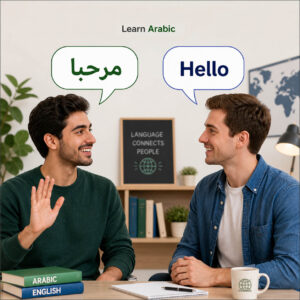
Arabic Has Levels — Just Like English!
Before you start learning Arabic, there is one important thing you need to know: Arabic is not just one language. It has different “levels,” just like English does.
Let’s use English as an example first, because you already know it.
Think About English for a Moment
In English, you don’t always speak the same way. You change your language depending on the situation:
- When you write a university essay or a formal report, you use academic, formal English: “The results of the study indicate a significant correlation between the two variables.”
- When you talk with your friends or family, you use casual, everyday English: “Yeah, the results kinda show they’re connected.”
- And depending on where you’re from, you might say things a little differently: A British person says “lift”, an American says “elevator” — same object, different word.
Arabic works exactly the same way. There are three main “levels” of Arabic, and each one has its place.
Level 1 — Classical Arabic
The English equivalent → Old English / Shakespearean English
Think of Classical Arabic like the English of Shakespeare — “Thou art the most beauteous creature mine eyes have beheld.” It’s beautiful, powerful, and important — but nobody speaks it on the street today.
Classical Arabic is the language of:
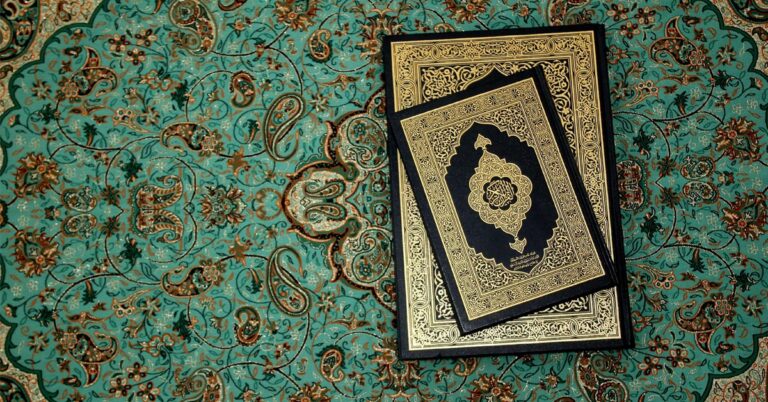
- ✅ The Holy Quran
- ✅ Ancient Islamic texts and poetry
- ✅ Great scholars from 1,000+ years ago
Who learns it? Students of the Quran, Islamic scholars, and lovers of classical literature.
Level 2 — Modern Standard Arabic (MSA)
The English equivalent → Formal / Academic English
This is exactly like the formal English you use in school essays, news articles, or professional emails. It is structured, correct, and understood by everyone — but it’s not how people chat with their neighbors.
MSA is the language of:
- ✅ Arab TV news like Al Jazeera.
- ✅ School textbooks across all Arab countries
- ✅ Official government speeches
- ✅ Books, newspapers, and literature
The great thing about MSA (Fusha)? It is the SAME in every Arab country. Whether you’re in Morocco, Egypt, Lebanon, or Saudi Arabia — educated Arabs all understand Fusha. It’s the common ground.
👉 This is where most beginners should start.
Level 3 — Arabic Dialects
The English equivalent → Everyday spoken English / Regional accents
This is the casual, street-level English — the way you actually talk. Just like English has American, British, Australian, and Caribbean accents and slang, Arabic has regional dialects too.
The main dialect groups are:
| Dialect | Where It’s Spoken | Fun Fact |
|---|---|---|
| Egyptian | Egypt | The most widely understood — like Egyptian movies are everywhere! |
| Levantine | Syria, Lebanon, Jordan, Palestine | Soft and melodic, popular in Arab TV series |
| Gulf | Saudi Arabia, UAE, Kuwait, Qatar | Closest to Classical Arabic |
| Maghrebi | Morocco, Algeria, Tunisia | Mixed with French and Berber — even other Arabs find it tricky! |
| Iraqi | Iraq | Has Persian and Turkish influences |
⚠️ Important: Dialects can be so different that a Moroccan and a Saudi might not fully understand each other in casual conversation — just like a Jamaican and a Scotsman might struggle with each other’s English!
So… Which One Should You Learn?
Here’s the simple answer:
| Your Goal | Start With |
|---|---|
| Understand the Quran | Classical Arabic |
| Travel, work, or study anywhere in the Arab world | Modern Standard Arabic (Fusha) |
| Move to or connect with a specific country | MSA + that country’s dialect |
| Watch Egyptian movies or series | Egyptian dialect |
The golden rule for most beginners:
🌟 Start with Fusha (MSA). It’s your foundation. Then pick up a dialect as you go.
It’s like learning formal English grammar first — once you have the rules, the slang becomes easy to pick up naturally.
The Bottom Line
| Type | Like in English | Used For |
|---|---|---|
| Classical Arabic | Old/Shakespearean English | Quran, ancient texts |
| Modern Standard (Fusha) | Formal / Academic English | News, books, school, official use |
| Dialects (Ammiya) | Everyday spoken English | Daily conversations, family, street life |
Arabic is a language of incredible depth and beauty. The fact that it has these different levels isn’t a problem — it’s what makes it so rich. Once you understand this from the start, your learning journey becomes much clearer.
مرحباً بك! — Welcome aboard! 🌙